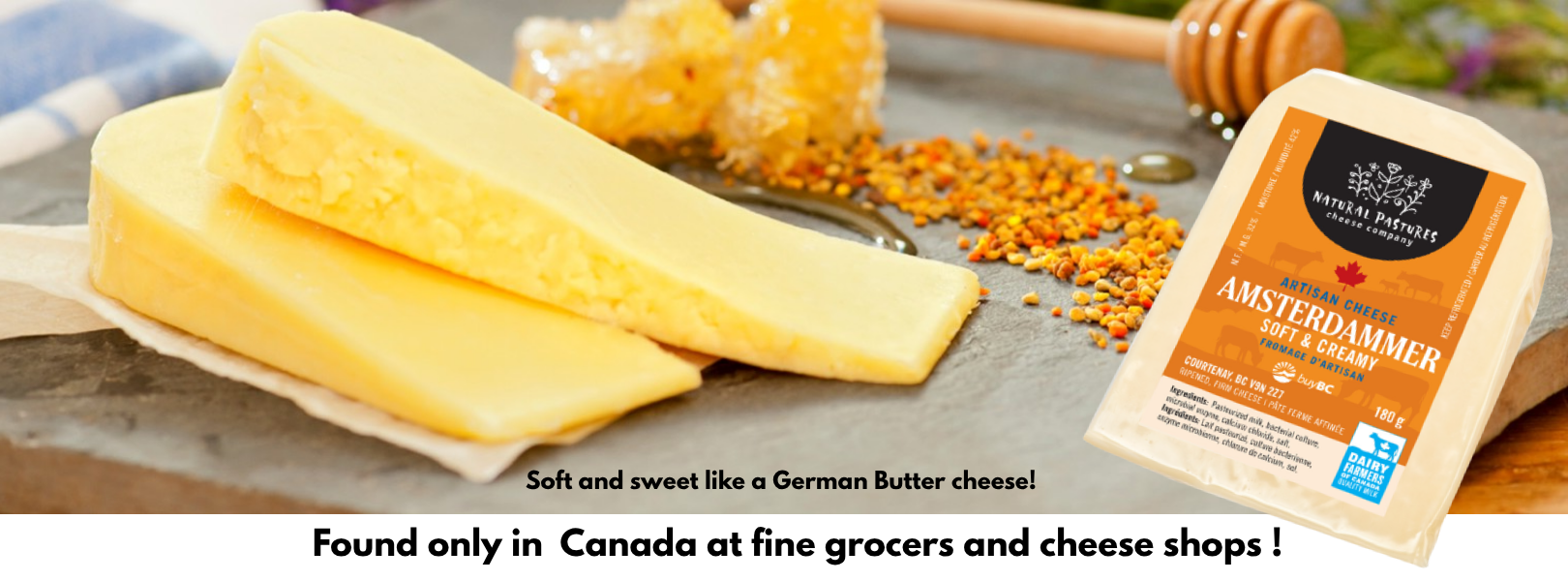
Some cheeses are bold. Some cheeses are bossy. And then there is Amsterdammer — the cheese that fights with no one.
Buttery, smooth, melty, and easy to love, Amsterdammer is one of those cheeses that quietly belongs everywhere. On a summer cheese board, tucked into a picnic sandwich, sliced for a snack plate, melted over burgers, or stirred into a cozy mac and cheese after a long day outside — Amsterdammer is always a good idea.
Inspired by a German-style butter cheese, our Amsterdammer is mild, creamy, and wonderfully approachable. It has a gentle richness and a smooth, melt-in-your-mouth texture that makes it a favourite for young and old. Kids love it because it is mild and creamy. Adults love it because it pairs beautifully with so many foods and drinks. Hosts love it because it works with just about everything.
That is why we like to call it the summer cheese of choice.
Why Amsterdammer Belongs in Your Summer Fridge
Summer eating should feel easy. Fresh fruit, simple crackers, good bread, a few pickles, maybe a little honey or mustard, and a beautiful local cheese that brings it all together.
Amsterdammer does exactly that. Its flavour is mild, buttery, creamy, smooth, approachable, and lightly savoury. It does not overpower a board, but it also never gets lost. It is mellow enough to pair with fresh summer fruit and bright drinks, yet rich enough to make a sandwich, burger, or grilled cheese feel special.
Best Ways to Enjoy Amsterdammer
Amsterdammer is one of our most versatile cheeses. Try it:
On summer cheese boards
-Sliced with apples, pears, grapes, or fresh baguette
-Melted into grilled cheese or mac and cheese
-Layered onto burgers or breakfast sandwiches
-Packed into kids’ lunches or picnic snack boxes
-Served with crackers, honey, mustard, pickles, or fruit preserves
-Melted over potatoes, vegetables, or baked dishes
It is also a perfect “everyone at the table” cheese — gentle enough for simple tastes, but still delicious enough for serious cheese lovers.
What to Pair With Amsterdammer
Because Amsterdammer is so smooth and mellow, it lets other flavours shine. Pair it with crisp apples, pears, grapes, fresh baguette, honey, mustard, pickles, fruit preserves, or simple crackers.
For drinks, Amsterdammer works beautifully with sparkling wine, crisp white wine, light reds, cider, beer, fruit juice, and even whisky. It is the kind of cheese that can sit comfortably beside a casual picnic drink or a more thoughtful pairing.
A Cheese for Young and Old
Amsterdammer is proof that simple can still be special. It is not trying to be the loudest cheese on the board. It is the cheese everyone reaches for again and again.
Smooth, buttery, melty, and made for sharing — Amsterdammer is ready for summer boards, sandwiches, snack plates, family lunches, and cozy nights when mac and cheese is exactly what the day needs. Find Amsterdammer at your local grocery in the deli section
It will be new to your Choices Store this summer, Thrifty Foods and many more !
Amsterdammer: the summer cheese that fights with no one.