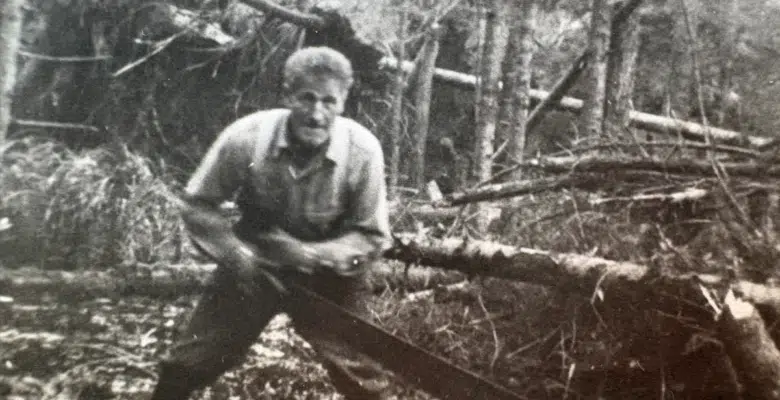
The operations of Beaver Meadow Farms and Natural Pastures Beef have now come to an end, but their history remains deeply connected to the beginnings of Natural Pastures Cheese Company, the Smith family, and generations of farming in the Comox Valley.
Natural Pastures Cheese Company no longer sells beef along side our cheese, in our Artisan Cheese Shop at 621 McPhee Avenue in Courtenay. However, the story of Beaver Meadow Farms continues to be an important part of who we are and where we came from.
A Family Farming Story
Beaver Meadow Farms was once owned and operated by the Smith family. It was where brothers Edgar, Phillip, Rod, and Doug Smith grew up, surrounded by cattle, fields, forests, streams, and the daily responsibilities of farm life.

The family’s agricultural roots began long before they settled in the Comox Valley.
Their grandfather first homesteaded near North Battleford, Saskatchewan, before moving to Vancouver Island in the 1920s. The family continued farming in the Comox Valley, passing its agricultural knowledge, work ethic, and respect for the land from one generation to the next.

The brothers’ father and grandfather were both farmers, and the Smith family learned that a farm was more than a place of production. It was a living system made up of soil, water, animals, plants, wildlife, weather, and the people responsible for caring for it. Although Beaver Meadow Farms has since been sold, its legacy remains an important part of the Natural Pastures story.
Farming “In Sync With Nature”
For decades, the Smith family described Beaver Meadow Farms with the words:
“In Sync With Nature.”
This philosophy guided the family’s approach to agriculture.

Beaver Meadow Farms became a certified organic farm that continued many of the farming practices established by earlier generations of the family. The farm used regenerative agricultural practices intended to build healthy soil, protect waterways, support biodiversity, and maintain productive pastures for future generations.
Edgar Smith, a professional agrologist and third-generation farmer, believed agriculture could produce healthy local food while also protecting the natural environment.
The fertility of the soil was supported through compost, manure, and manure tea. Cattle grazed through the meadows in carefully managed rotations, helping to prevent overgrazing while encouraging deeper root growth and stronger soil structure.
These practices helped the land retain moisture, store carbon, support diverse plant life, and remain productive during increasingly dry Vancouver Island summers.
Protecting the Little River Watershed
One of the most significant parts of the Beaver Meadow Farms story was its relationship with the Little River watershed.
For three generations, the family worked to protect wildlife and aquatic habitat throughout the farm’s streams, fields, forests, and wetlands.
In partnership with the Little River Enhancement Society, the farm supported an on-farm hatchery for coho, pink, and chum salmon, as well as sea-run cutthroat trout.
Trees, brush, wetlands, springs, and beaver habitat created important buffers along the waterways. These areas helped cool the water, protect young fish, reduce erosion, and create a transition between grassland and forest.
The farm’s conservation efforts received several forms of recognition, including the Comox Valley Chamber of Commerce Environmental Initiative Award and the Countryside Canada National Stewardship Recognition Award.
Beaver Meadow Farms was also recognized for meeting Salmon-Safe agricultural standards related to waterway protection, water conservation, erosion control, natural fertility management, pest management, and biodiversity.
Theresa Fresco, then Salmon-Safe BC Program Manager with the Fraser Basin Council, wrote:
“Beaver Meadow Farms meets all of the Salmon-Safe Agriculture standards, including protection of waterways, water conservation, natural pest and fertility management, erosion and sedimentation control, and protection of biodiversity.”
Sunlight, Grass, Water, and Coastal Terroir
Edgar often described sunlight as the foundation of the farm’s production system.
The diverse grasses and herbs growing in the meadows captured energy from the sun. Through grazing, that energy supported the cattle, the soil, the plants, and the wider farm ecosystem.
The Comox Valley’s coastal climate offered a long grazing season, with cattle able to graze the meadows for much of the year. Different plants were selected to suit the farm’s changing seasonal conditions. Some grew best during the cool spring and fall, while others were better adapted to dry summer weather.
The farm relied primarily on naturally cycled rainwater stored within the soil and surrounding aquifers. Thick pasture sod, deep plant roots, and carefully managed grazing helped the land absorb and hold precipitation.
Winter rainfall and snowmelt were stored within the Quadra Sands Aquifer beneath the farm. During the summer, this water emerged through natural springs and helped provide drinking water, limited irrigation, and cool rearing habitat for salmon and trout.
Edgar believed this combination of sunlight, coastal rain, fertile soils, diverse pastures, and the nearby Pacific Ocean created a character unique to the Comox Valley.
He referred to this as the farm’s terroir.
Salt-laden coastal rains fell on pastures close to the ocean, influencing the grasses and herbs eaten by the cattle. This local landscape contributed to the character of the food produced from the farm.
Organic and Regenerative Farming Practices
Beaver Meadow Farms’ organic inspections were conducted by the British Columbia Association for Regenerative Agriculture.
The farm’s production standards included organic pasture management and the avoidance of genetically modified feed, pesticides, herbicides, growth hormones, and routine antibiotics.
The cattle lived and grazed together in established herds, allowing their natural social order to remain intact. The family believed that access to pasture, natural sunlight, exercise, and a secure herd environment contributed to lower-stress animal management.
The farm was also home to a remarkable range of wildlife, including bears, cougars, deer, beavers, otters, mink, hawks, owls, eagles, songbirds, migratory birds, and wintering trumpeter swans.
Rather than viewing wildlife as separate from the farm, the Smith family considered it part of the farm’s natural balance.
Farming Through a Changing Climate
During the heat of the summer of 2021, Edgar reflected on the way regenerative farming practices helped moderate conditions on the farm:
“Yes, this heat is challenging for all on the farm. The good thing is, with all the grass and trees, it is a lot cooler than neighbouring farms. Our regenerative farming and enhanced photosynthesis from all the plants increases evapotranspiration and cools the soils and atmosphere. It is still hot, but manageable.”
Edgar also wrote extensively about changes in the Comox Valley’s seasonal rainfall.
The east coast of Vancouver Island sits within a rain shadow, and the farm had experienced increasingly hot, dry summers. Rains that once arrived several times each month during the growing season became less reliable.
To adapt, the farm focused on protecting soil moisture, increasing plant diversity, maintaining thick pasture cover, and preventing overgrazing.
Healthy soil acted like a reservoir, holding winter moisture for use during the dry summer months. Rotational grazing encouraged deeper roots and increased the amount of organic material within the soil.
These practices helped keep the pastures productive while also protecting nearby streams and aquatic habitat.
The Beginning of Natural Pastures Cheese
The farming experience of the Smith family helped establish the values that would later shape Natural Pastures Cheese Company.
Natural Pastures Cheese began selling cheese in retail stores in 2000. From the beginning, the company focused on creating high-quality artisan cheese using milk from local Vancouver Island farms.
The same principles that guided Beaver Meadow Farms—respect for the land, local food production, animal care, environmental stewardship, and pride in the Comox Valley—became part of Natural Pastures Cheese.
Over the years, Natural Pastures cheeses have received numerous medals, awards, and championship titles.
The success of the cheese company demonstrated what could be created when skilled cheesemaking was combined with exceptional local milk and a strong connection to the farms and farming families of Vancouver Island.
Natural Pastures Cheese and Natural Pastures Beef
For a time, Natural Pastures Beef became an extension of the Smith family’s farming philosophy.
The grass-fed and grass-finished beef was raised on the farm’s coastal meadows and shared the Natural Pastures name with the family’s cheese company.
Edgar enjoyed introducing customers to the two products together. During retail tastings, Natural Pastures cheeses were served alongside Natural Pastures Beef, connecting the farm’s pastures, cattle, milk, beef, and cheese in one local food experience.
As Edgar once explained, these tastings were so successful that stores sometimes sold out of both the beef and the cheese.
His messages from the farm often ended with a cheerful reminder that farm work was never far away:
“Hi ho, off to work I go.”
Or, on another occasion:
“I have to go cut some silage now.”
These simple lines captured Edgar’s character and the reality of farm life. There was always another pasture to check, another animal to care for, another field to harvest, or another job waiting to be done.
The Closing of a Chapter—and the Beginning of Another
Beaver Meadow Farms has since been sold, and the Natural Pastures Beef operation has now been retired.
While Natural Pastures Cheese Company no longer owns Beaver Meadow Farms and no longer sells Natural Pastures Beef, the farm will always remain part of our history.
It was a place where Edgar, Phillip, Rod, and Doug Smith grew up, where generations of their family farmed, where salmon habitat was restored, where cattle grazed coastal meadows, and where a philosophy of producing food “in sync with nature” took root.
Today, the land is in the midst of becoming a blueberry farm. Although its purpose is changing, the farm will continue producing food, supporting agriculture, and feeding people.
That continuation feels fitting. Farms evolve from one generation to the next, but good land remains productive when it is cared for and respected.
The values shaped at Beaver Meadow Farms continue to influence Natural Pastures Cheese today.
Our cheese is still made in Courtenay using milk from local farms, and our company remains committed to supporting Vancouver Island agriculture, skilled food production, environmental responsibility, and the people and communities that have helped us grow.
The land may change hands, the crops may change, and farming operations may evolve, but the Smith family’s history at Beaver Meadow Farms will always be part of the roots of Natural Pastures Cheese Company—and the farm itself will continue its long tradition of feeding the community.
While Natural Pastures Cheese Company no longer owns Beaver Meadow Farms and no longer sells Natural Pastures Beef, the farm will always remain part of our history.
It was a place where Edgar, Phillip, Rod, and Doug Smith grew up, where generations of their family farmed, where salmon habitat was restored, where cattle grazed coastal meadows, and where a philosophy of producing food “in sync with nature” took root.
Today, the land is in the midst of becoming a blueberry farm. Although its purpose is changing, the farm will continue producing food, supporting agriculture, and feeding people.
That continuation feels fitting. Farms evolve from one generation to the next, but good land remains productive when it is cared for and respected.
The values shaped at Beaver Meadow Farms continue to influence Natural Pastures Cheese today.


Our cheese is still made in Courtenay using milk from local farms, and our company remains committed to supporting Vancouver Island agriculture, skilled food production, environmental responsibility, and the people and communities that have helped us grow.
The land may change hands, the crops may change, and farming operations may evolve, but the Smith family’s history at Beaver Meadow Farms will always be part of the roots of Natural Pastures Cheese Company—and the farm itself will continue its long tradition of feeding the community.
